OVERVIEW

EMi is an emotional wellness companion for children aged 8–13, developed as part of Assessment for Good (AFG), a research and development program focused on asset-based formative assessment for young learners. The product explores a child-first approach to emotional check-ins that supports reflection and emotional awareness without turning feelings into scores.

EMi is an emotional wellness companion for children aged 8–13, developed as part of Assessment for Good (AFG), a research and development program focused on asset-based formative assessment for young learners. The product explores a child-first approach to emotional check-ins that supports reflection and emotional awareness without turning feelings into scores.

IMPACT

  • Shifted emotional assessment from adult-facing data collection to child-led reflection

  • Established a flexible design system to support future feature expansion

  • Early feedback showed the experience felt friendly, safe, and easy for young learners

The Challenge

Why existing emotional tools were not working for kids.

Why existing emotional tools were not working for kids.

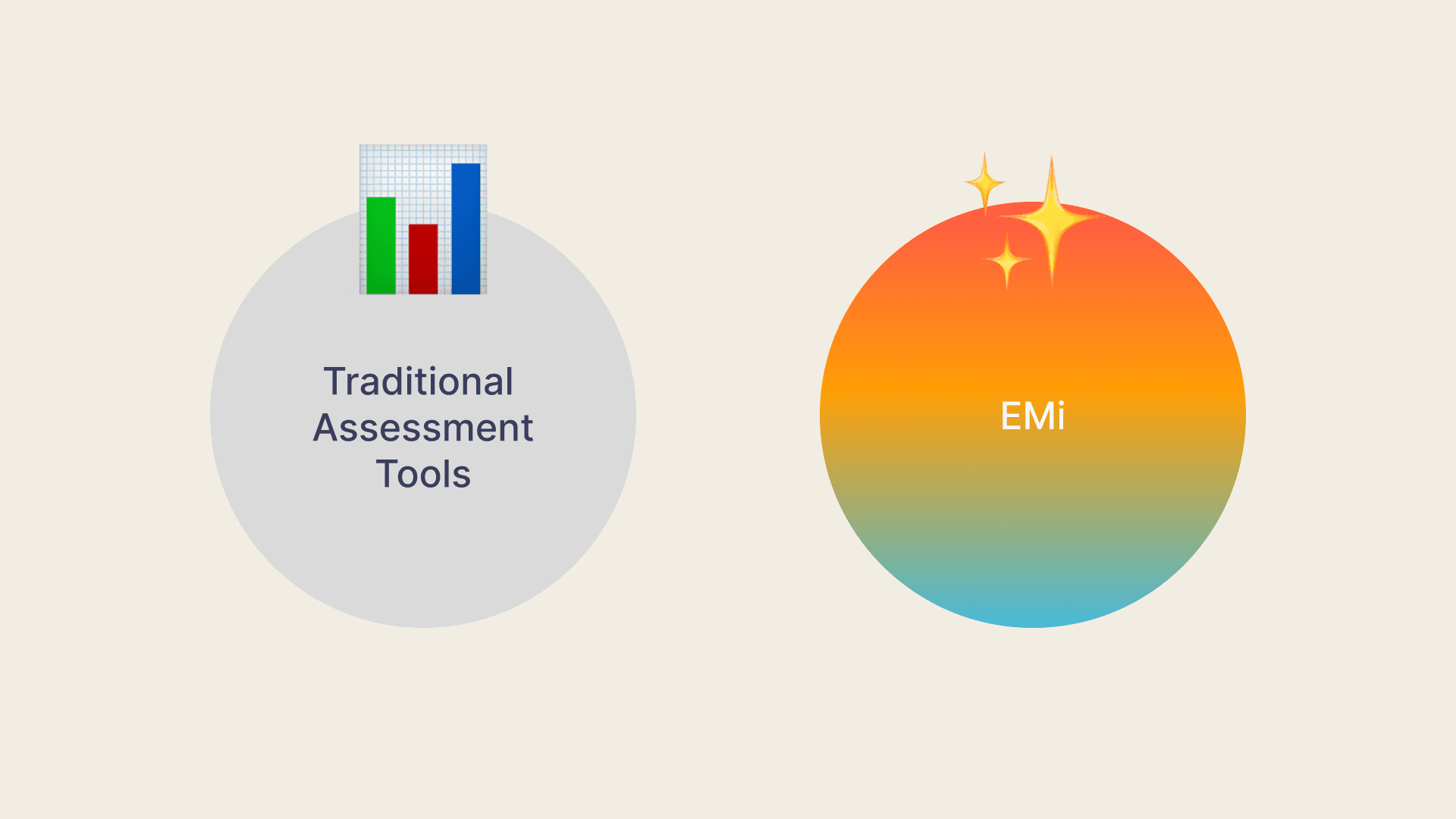
Most emotional tools in schools are designed for adults. They focus on data, tracking, and reporting. Children are asked to share feelings, but have little control over how those feelings are expressed or interpreted. This leads to Low trust, Shallow engagement, Emotional check-ins that feel like tests.
Design Goals

What we set out to achieve.

What we set out to achieve.

We focused on three goals:

  • Give children control over emotional expression

  • Make reflection feel safe, not evaluative

  • Support educators without exposing raw emotional data

We focused on three goals:

  • Give children control over emotional expression

  • Make reflection feel safe, not evaluative

  • Support educators without exposing raw emotional data

Research & Understandings

Grounding decisions in real classroom and learner patterns.

Grounding decisions in real classroom and learner patterns.

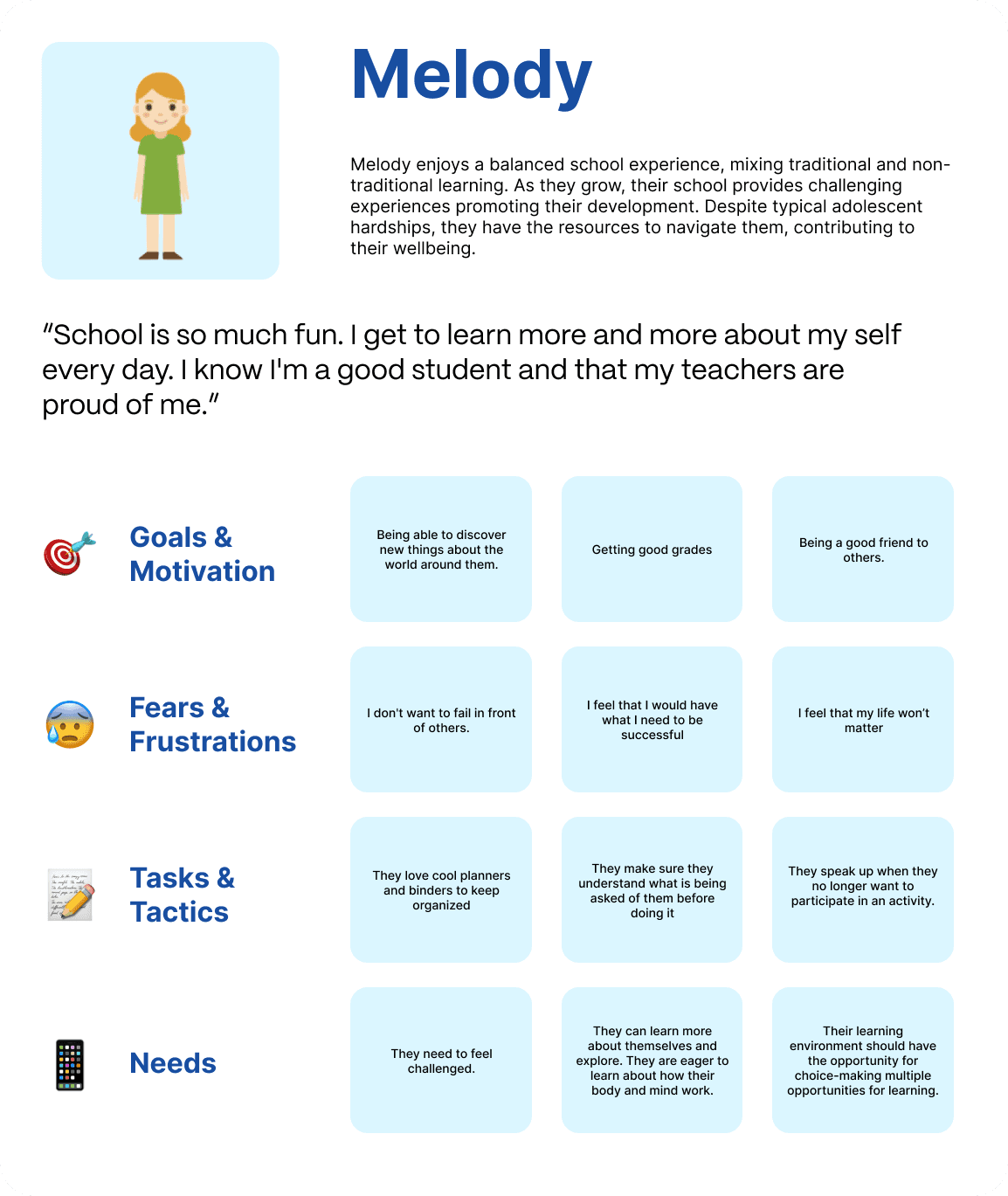
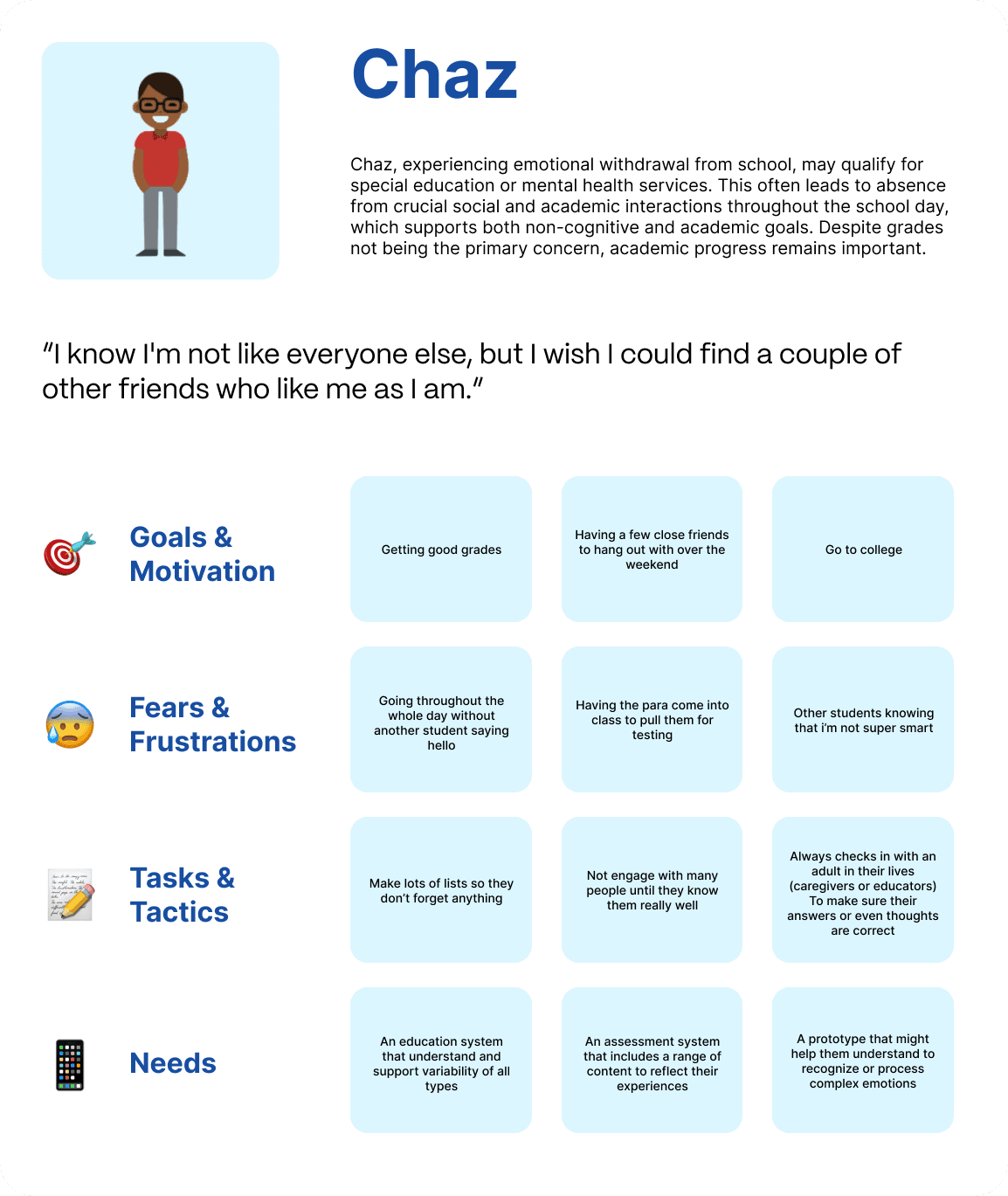
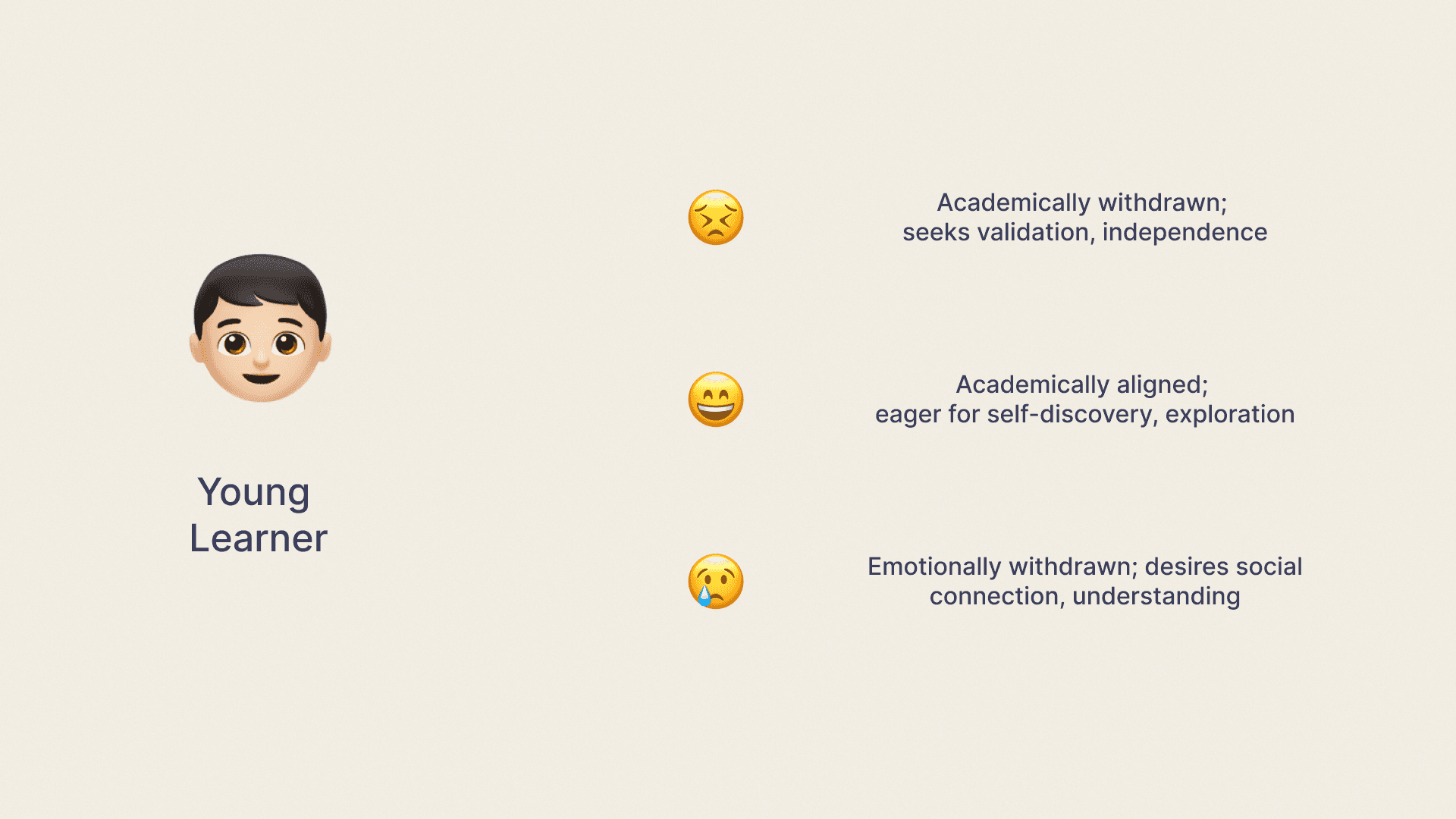
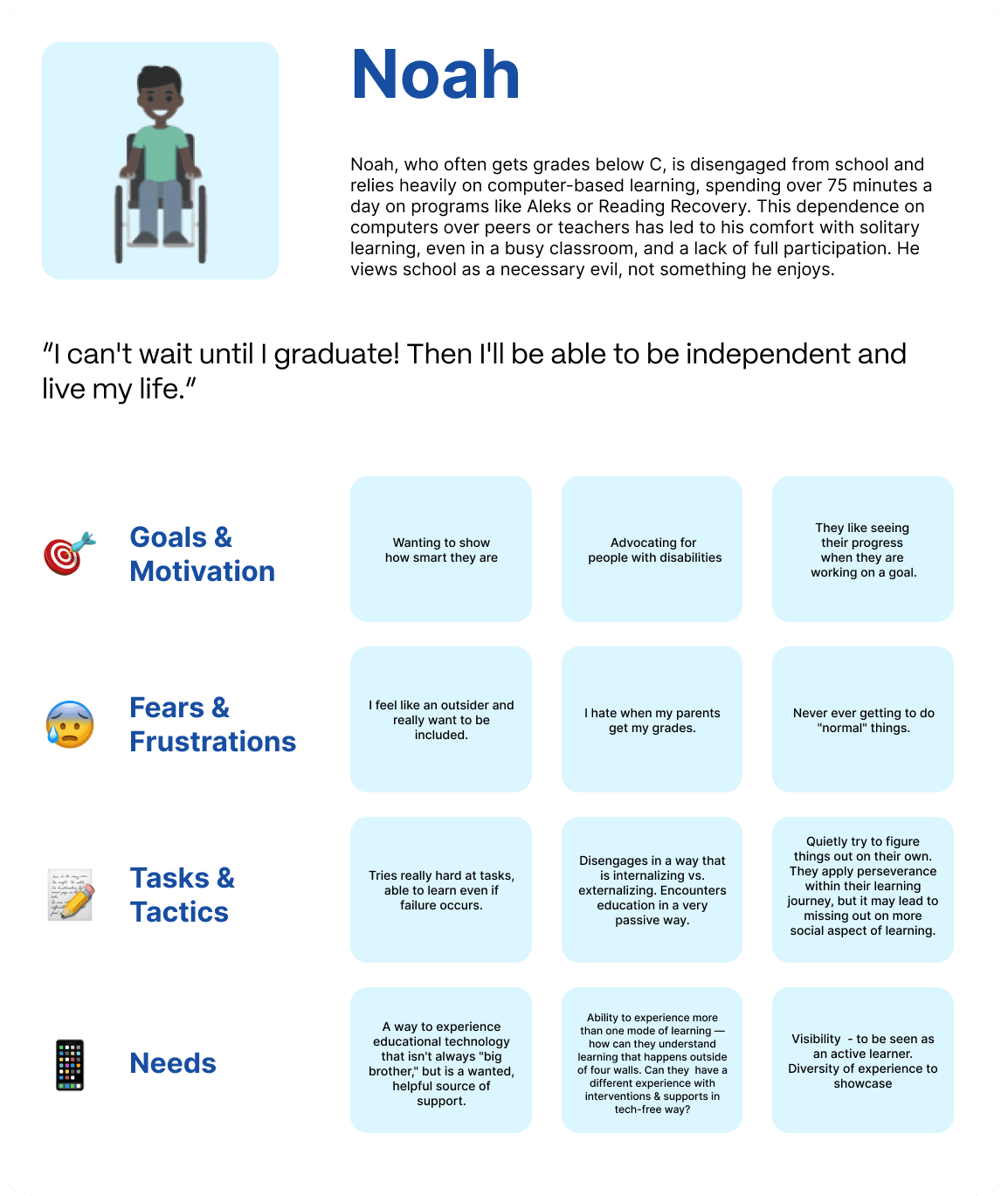
We worked closely with educators and client stakeholders to understand how children aged 8–13 experience emotional tools in learning environments. While we did not interview learners directly, the client shared synthesized insights from prior research and classroom observations.

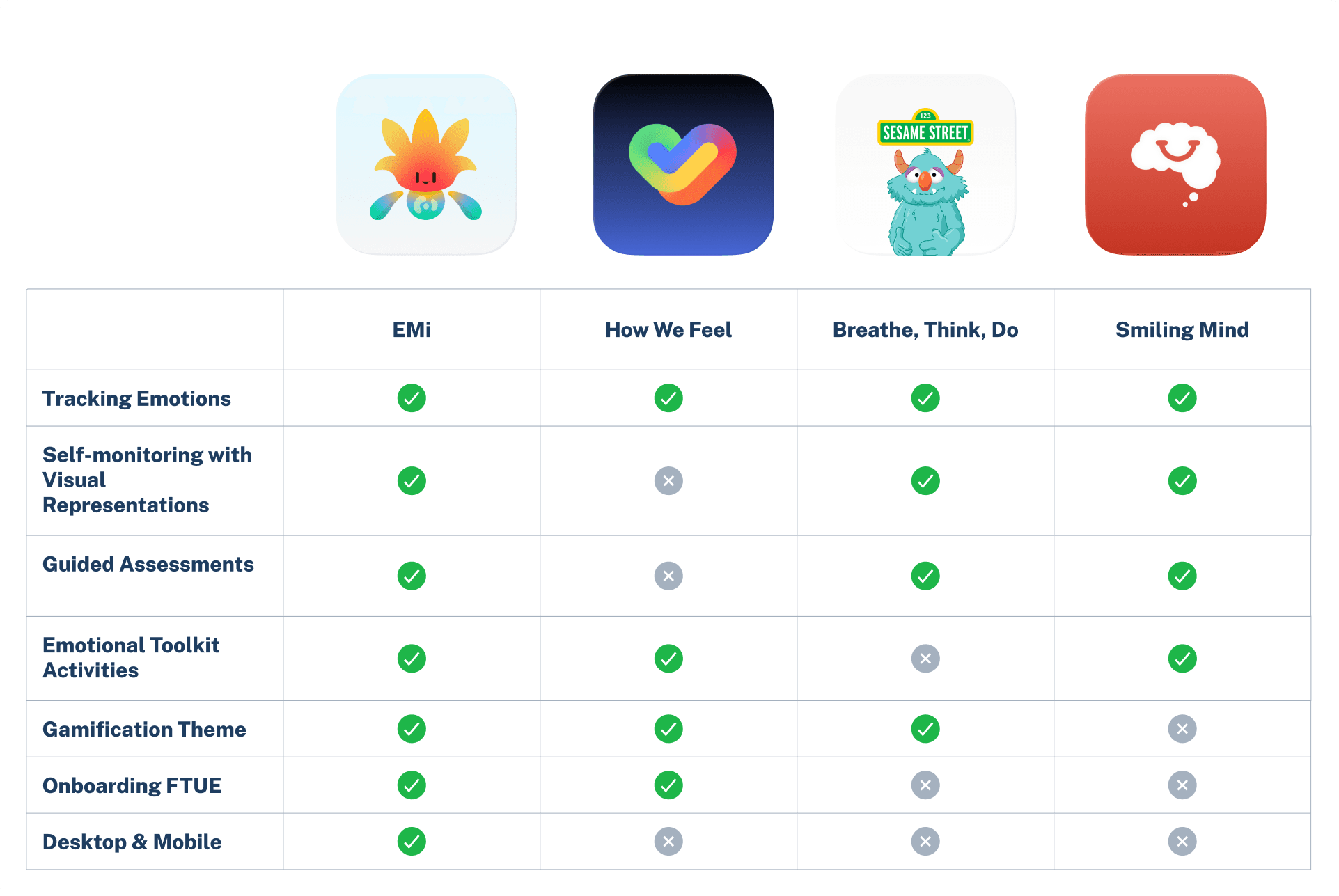
In parallel, we reviewed existing emotional wellness and assessment tools to understand common interaction patterns.

What we learned:

  1. Adult-controlled flows: Kids had little agency over what they shared

  2. Heavy reliance on reading: Text-based assessments were hard to access

  3. Gamification that felt like grading: Most tools rewarded behavior, not reflection
homeschool

Synthesis

Turning insights into a clear direction for the product

Turning insights into a clear direction for the product

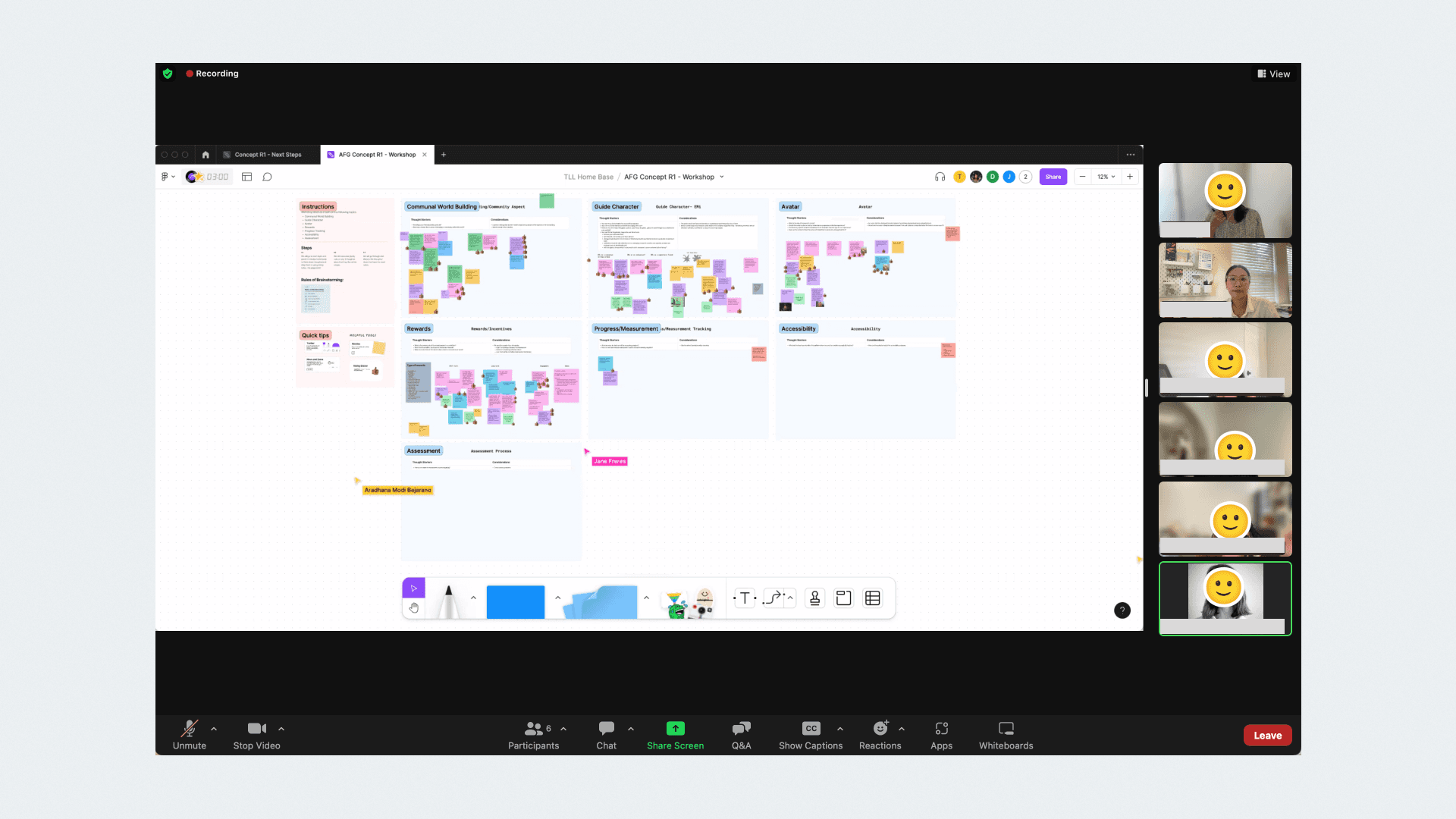
I worked with the team in a workshop to review research findings, align on priorities, and shape the core concept for EMi.
Exploring the Right Direction

Learning which ideas to let go.

Learning which ideas to let go.

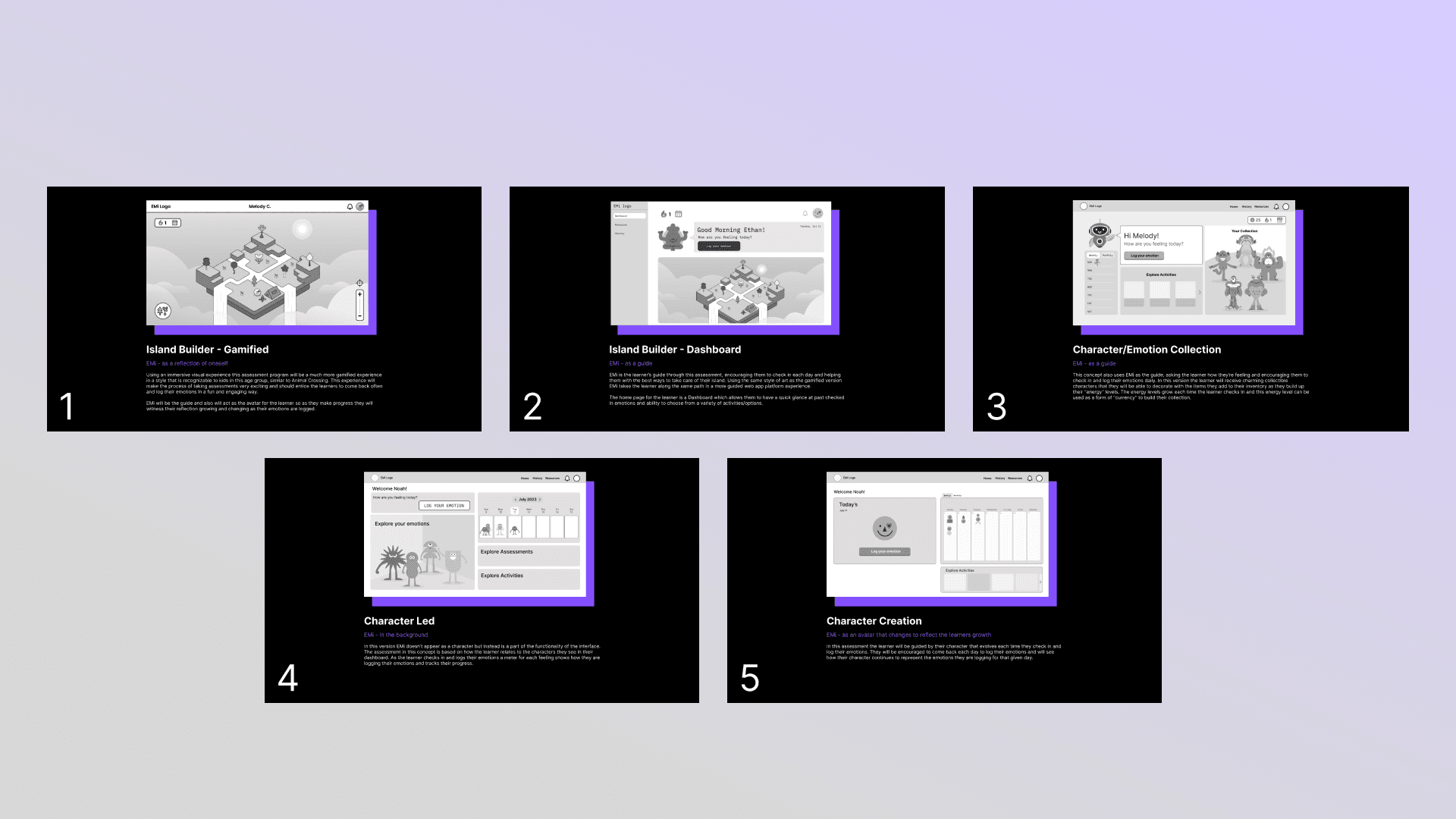
We explored five early design directions, from character evolution to dashboard-based flows. One early concept used an island metaphor, where learners built a personal space through daily check-ins. User feedback revealed an issue.

Some learners associated the island with being alone, which conflicted with our goal of emotional connection. We shifted to a world-building concept, a more open and connected environment that felt playful, safe, and emotionally supportive without reinforcing isolation.
User Flow & Journey and Gamification system

Designing a clear emotional flow from entry to reflection.

Designing a clear emotional flow from entry to reflection.

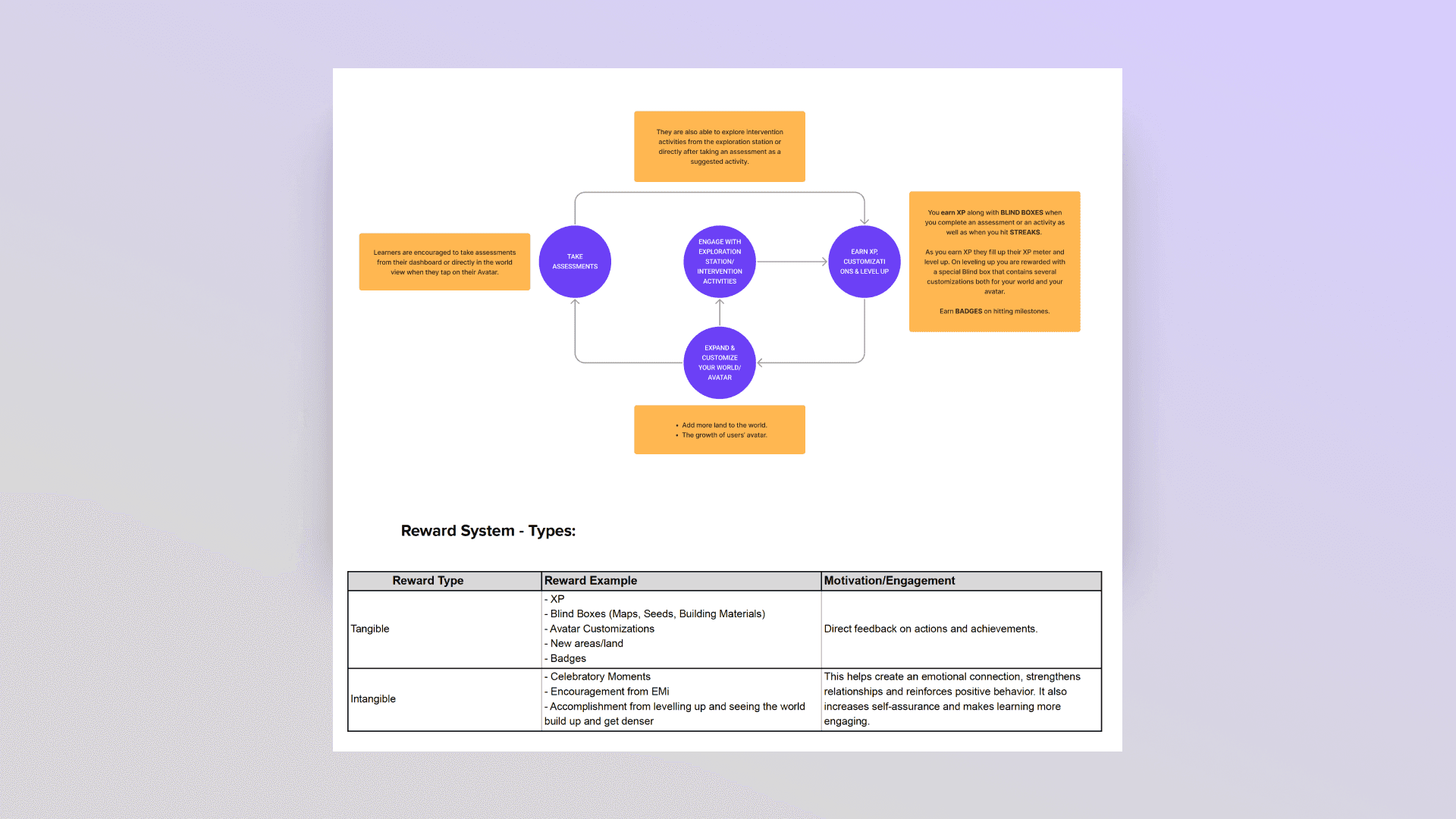
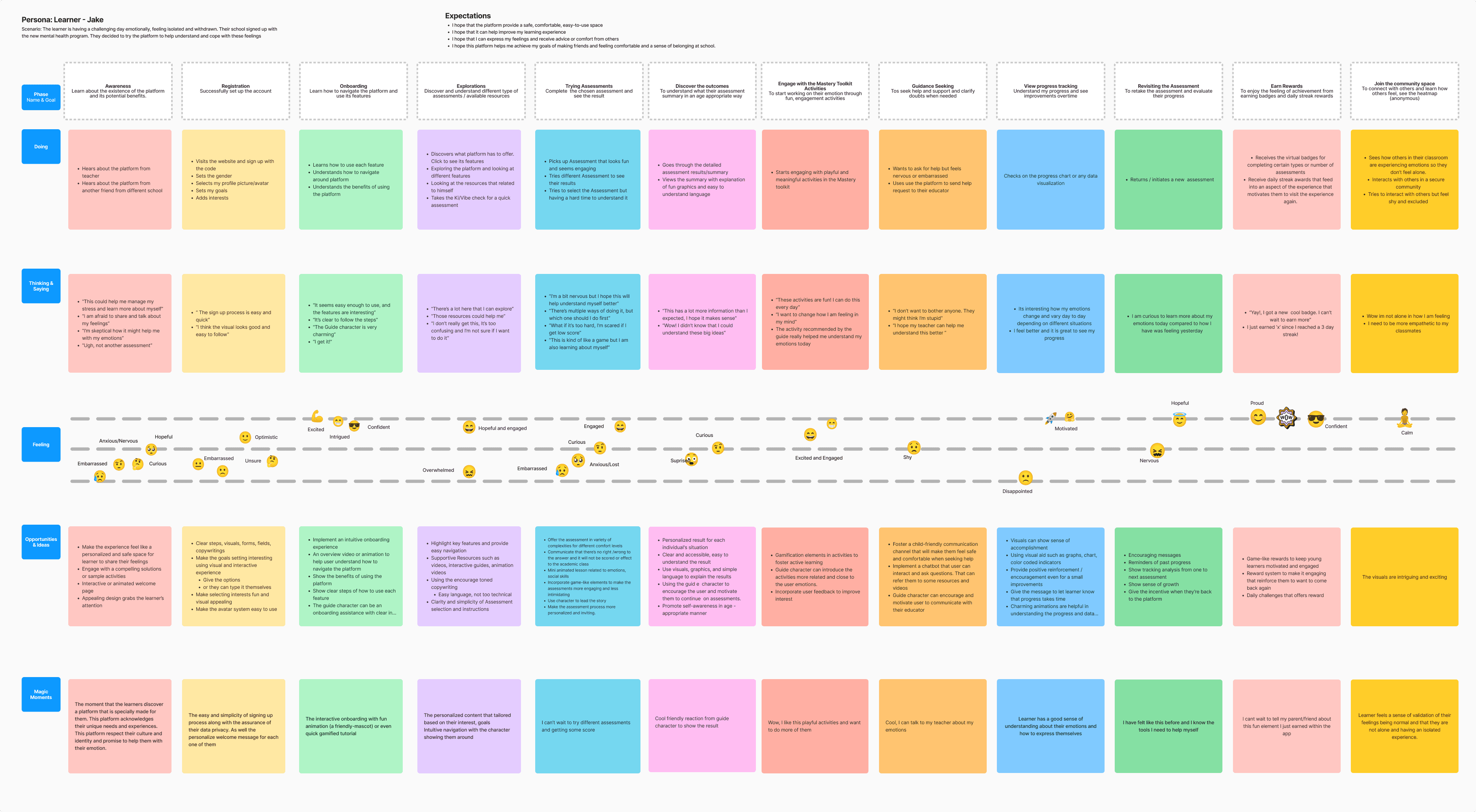
Together with the team, we ran a workshop to map the core user flow, focusing on all the users (learners, educators, caregivers) are interacting to each others.

We also devoted time to planning the game loop and strategy to maintain a logical in-game currency economy. Here are some design artifacts related to the game loop and reward system.

Drag to see more detail 👀
Core Experience Design
Ki Vibe Check

Ki Vibe Check

A simple daily check-in using emojis and soft prompts, letting kids log how they feel — without judgment, scoring, or pressure.

A simple daily check-in using emojis and soft prompts, letting kids log how they feel — without judgment, scoring, or pressure.

World Building (Home Page)

World Building (Home Page)

Instead of building an island, learners grow their own interactive world that evolves over time. It’s a calming, visual way to see emotional progress — and encourages kids to keep coming back.

Instead of building an island, learners grow their own interactive world that evolves over time. It’s a calming, visual way to see emotional progress — and encourages kids to keep coming back.

Domain Assessments

Domain Assessments

These go a bit deeper. Framed as guided reflections (not quizzes), they help kids understand themselves better while reinforcing emotional mastery over time.

These go a bit deeper. Framed as guided reflections (not quizzes), they help kids understand themselves better while reinforcing emotional mastery over time.

Accessibility by Design

Accessibility by Design

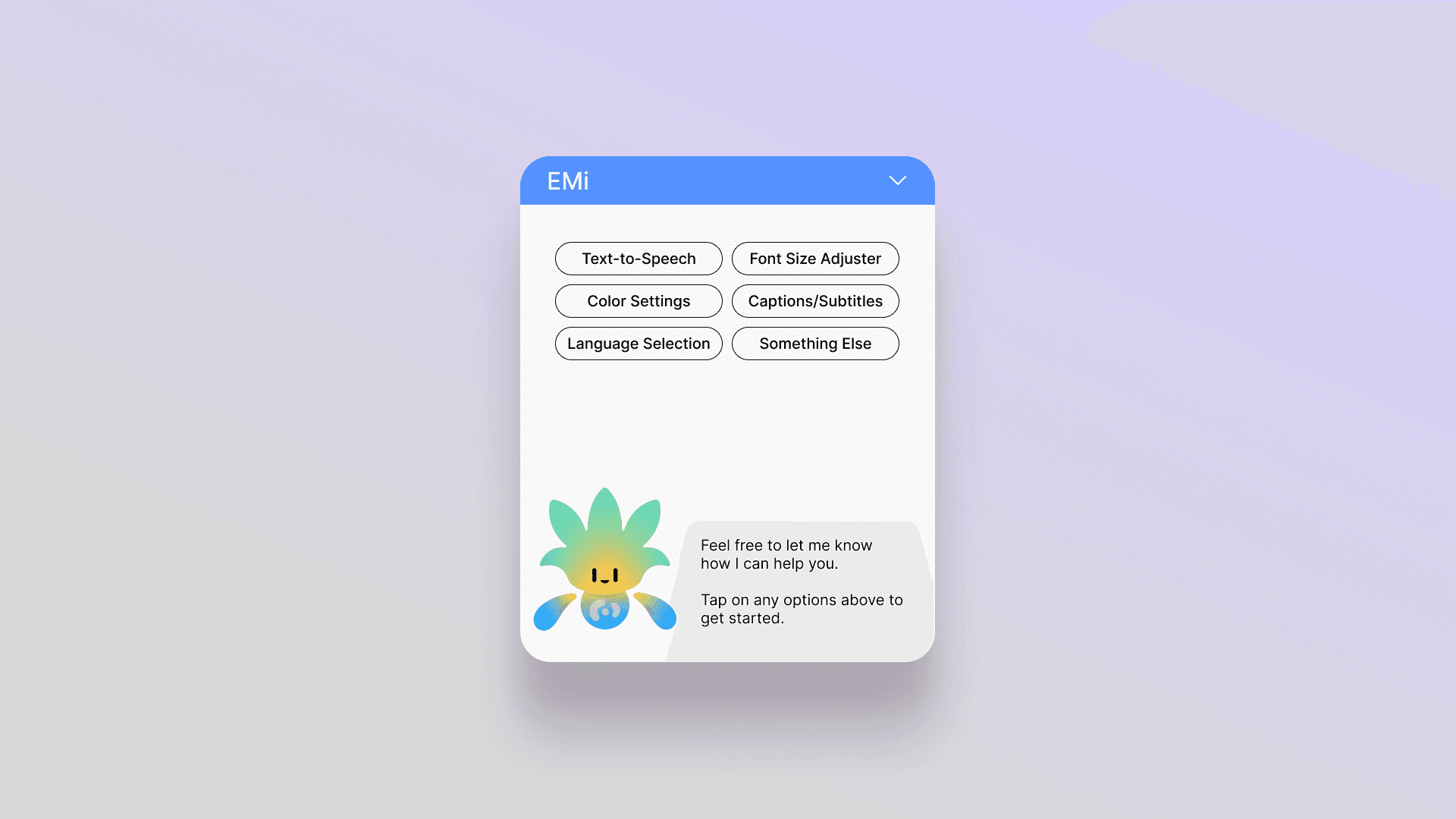
Accessibility was considered from the start and supported through an in-app assistant. Key features include:

  • Text-to-speech

  • Adjustable font sizes

  • Color and contrast controls

  • Language and caption options

Learners can adapt the experience to their needs, not the other way around.

Accessibility was considered from the start and supported through an in-app assistant. Key features include:

  • Text-to-speech

  • Adjustable font sizes

  • Color and contrast controls

  • Language and caption options

Learners can adapt the experience to their needs, not the other way around.

Accessibility was considered from the start and supported through an in-app assistant. Key features include:

  • Text-to-speech

  • Adjustable font sizes

  • Color and contrast controls

  • Language and caption options

Learners can adapt the experience to their needs, not the other way around.

Reflections

One of the most important lessons was understanding the need to create a safe and supportive environment for young learners to express their feelings.

One of the most important lessons was understanding the need to create a safe and supportive environment for young learners to express their feelings.

We focused on integrating features that prioritize emotional safety and foster a sense of understanding. This meant designing with empathy, ensuring that every interaction felt nurturing and supportive.

We focused on integrating features that prioritize emotional safety and foster a sense of understanding. This meant designing with empathy, ensuring that every interaction felt nurturing and supportive.

EMi CONCEPT PILOT Web App

An Emotional Wellness Companion for Young Learners


FOCUS

Emotional UX, Gamification Logic, Accessibility, Design System

YEAR

2023

2024

TEAM

Creative Director, PM, Product Designer, 2 Illustrators

ROLE

Senior Product Designer

FOCUS

Emotional UX, Gamification Logic, Accessibility, Design System

YEAR

2024

TEAM

Creative Director, PM, Product Designer, 2 Illustrators

ROLE

Senior Product Designer