OVERVIEW
IMPACT
Used by 100+ schools and 50,000+ students; recognized by MIT Solve and UNESCO
Improved English test scores by up to 37% in government schools
Built a scalable UX and design system to speed up team execution
Aligned product, engineering, and business around a shared experience vision
The Problem
Edsy had grown quickly, but the experience hadn’t scaled with it.
Edsy started as a small pilot and grew fast. Features were added quickly. Visual consistency slipped. Some tools became hard to use in live classrooms.
At the same time, the product had to work for three groups:
Schools deciding whether to buy it
Students trying to build confidence
A small team shipping under pressure
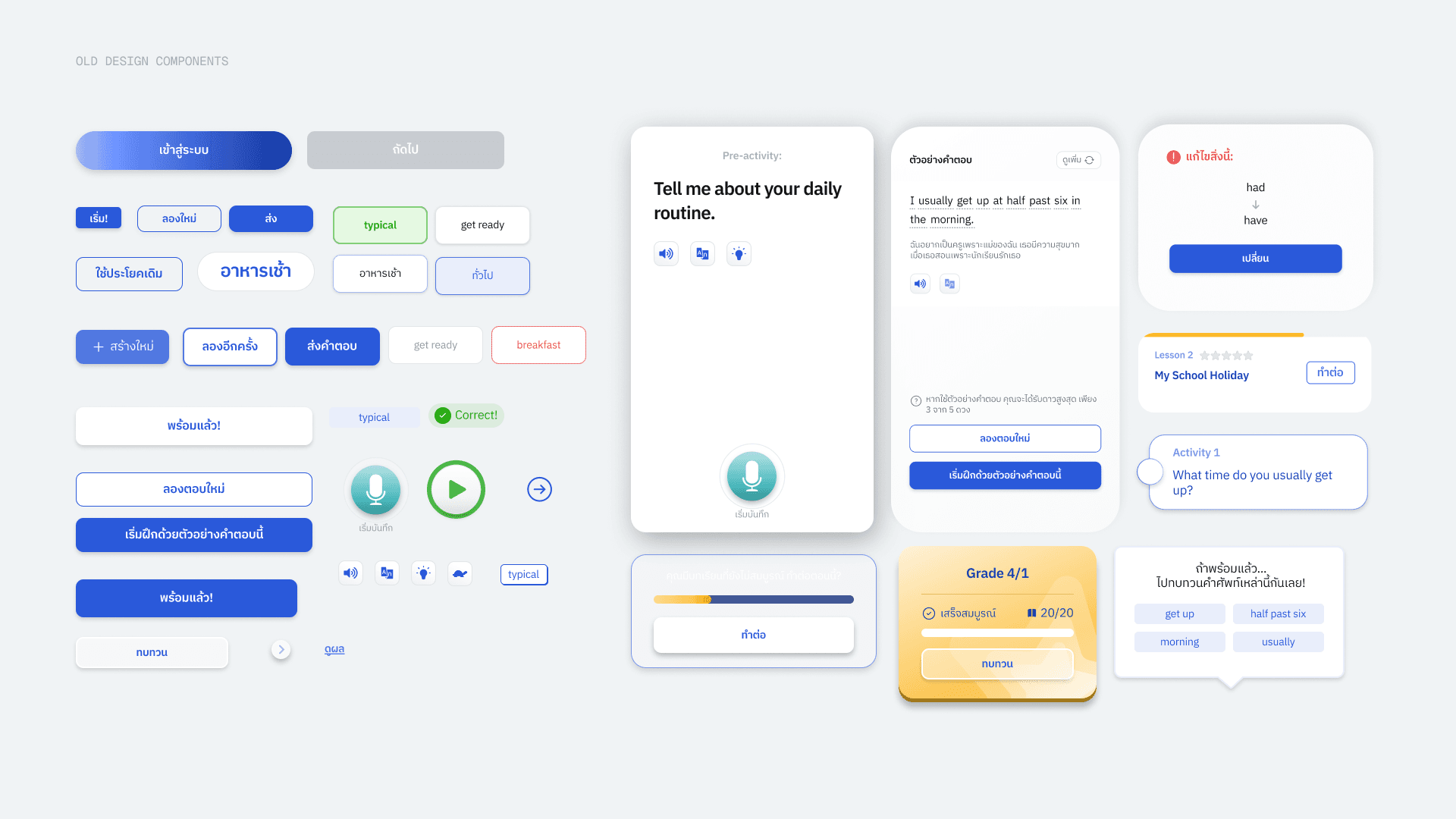
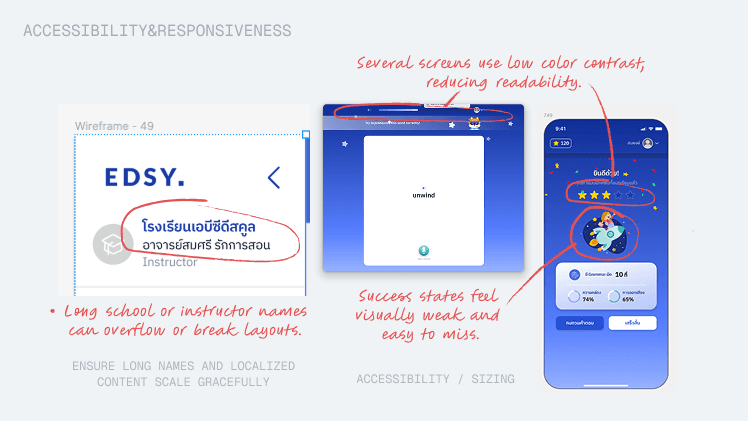
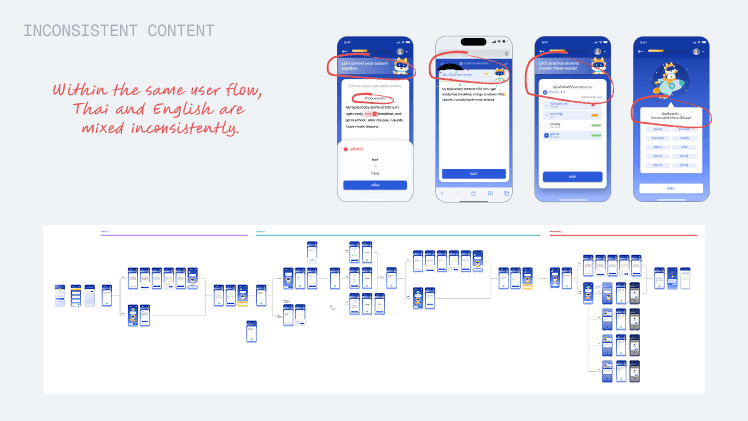
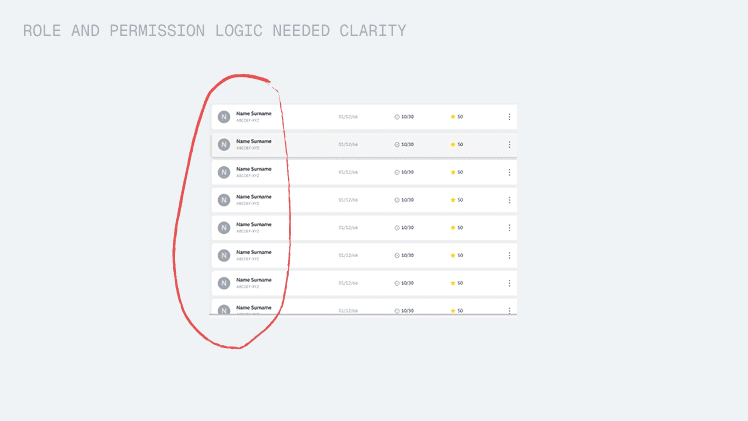
Platform Audit
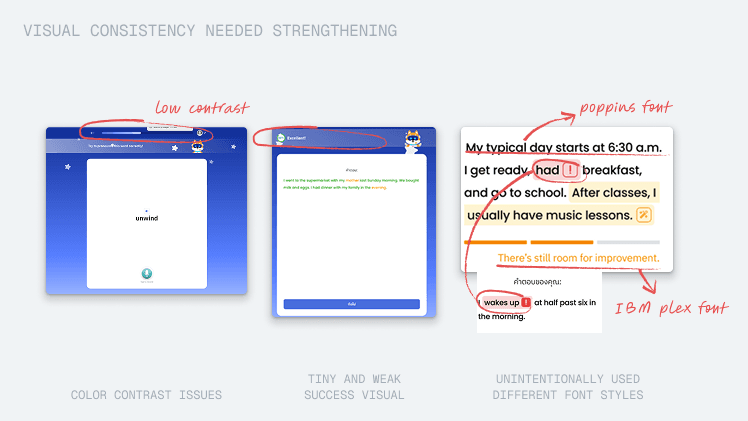
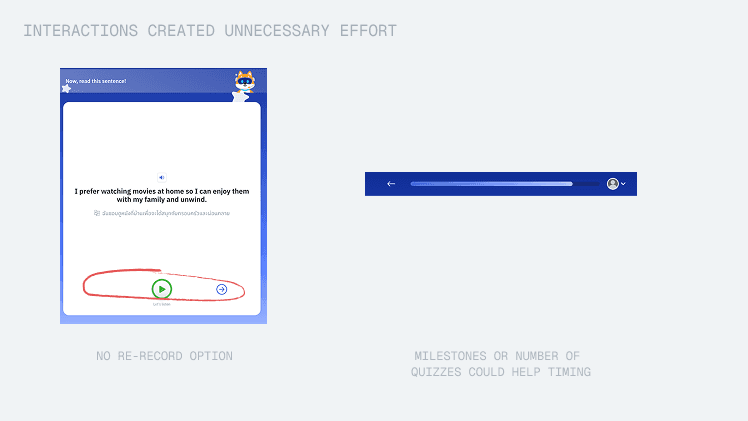
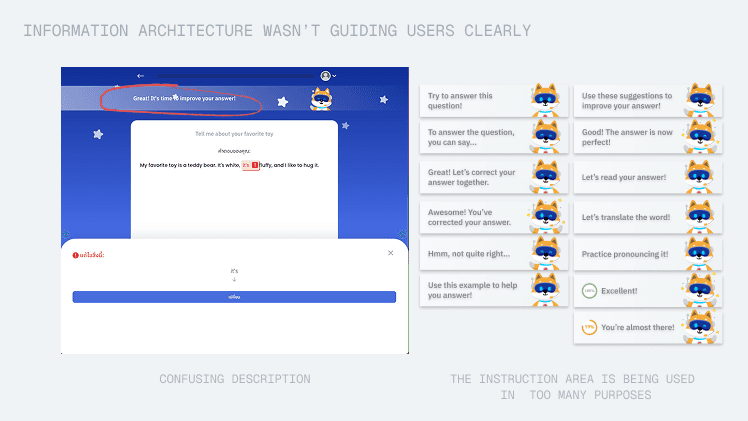
ResearcH
Before proposing solutions, I conducted a full audit of the student experience to understand where the product created friction and where the design system lacked structure.
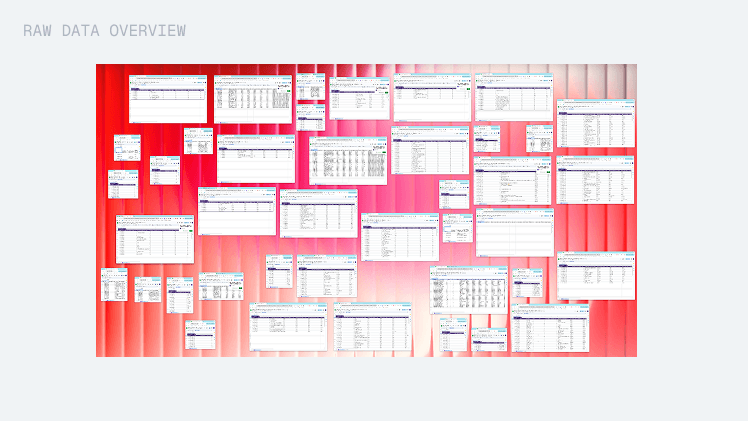
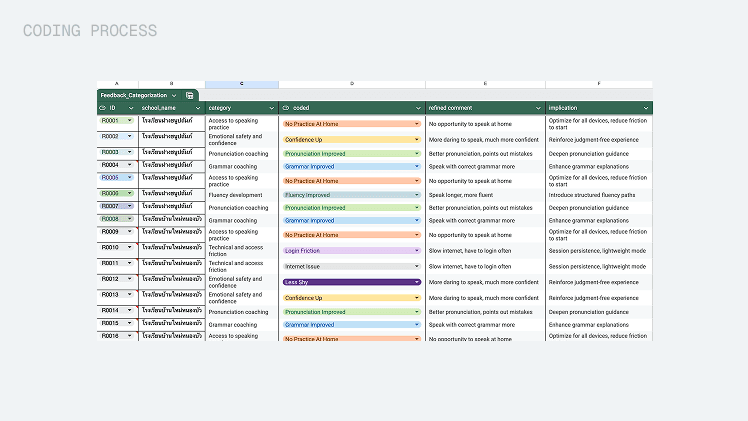
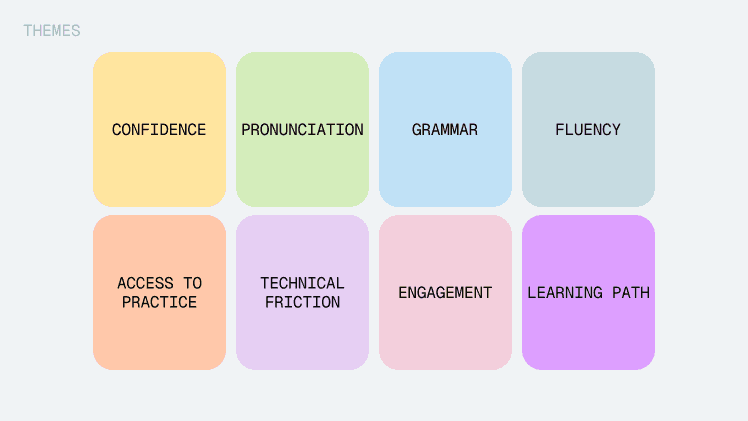
To better understand real usage, I analyzed feedback from 38 schools using thematic analysis and validated patterns through 5 usability interviews with students and teachers. The data showed strong confidence gains, but also highlighted friction around control, clarity, and reliability.
In parallel, we conducted a competitive UX benchmark against tools frequently compared by schools, including Duolingo, Mondly, and ELSA. While Edsy was trusted for structured classroom use, competing products felt more engaging due to stronger visual identity, richer feedback, motion, and audio cues.
From Insights to Direction
What I learned:
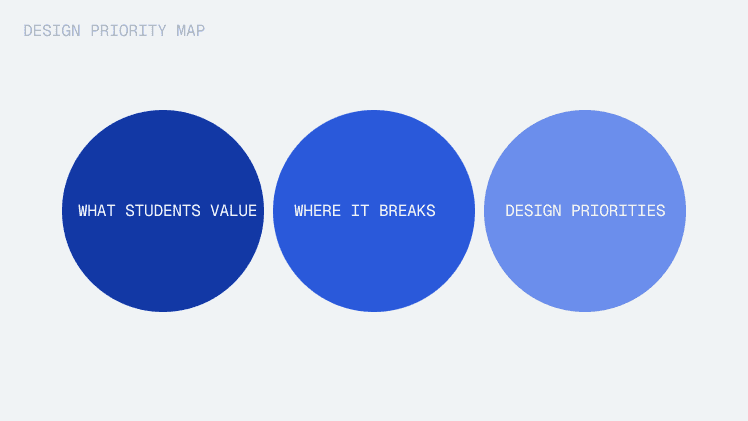
Students cared most about encouragement and visible progress
Teachers needed clarity and reliability during class
Buyers trusted Edsy, but felt it looked serious and less engaging than other tools
Interaction and Visual Refresh
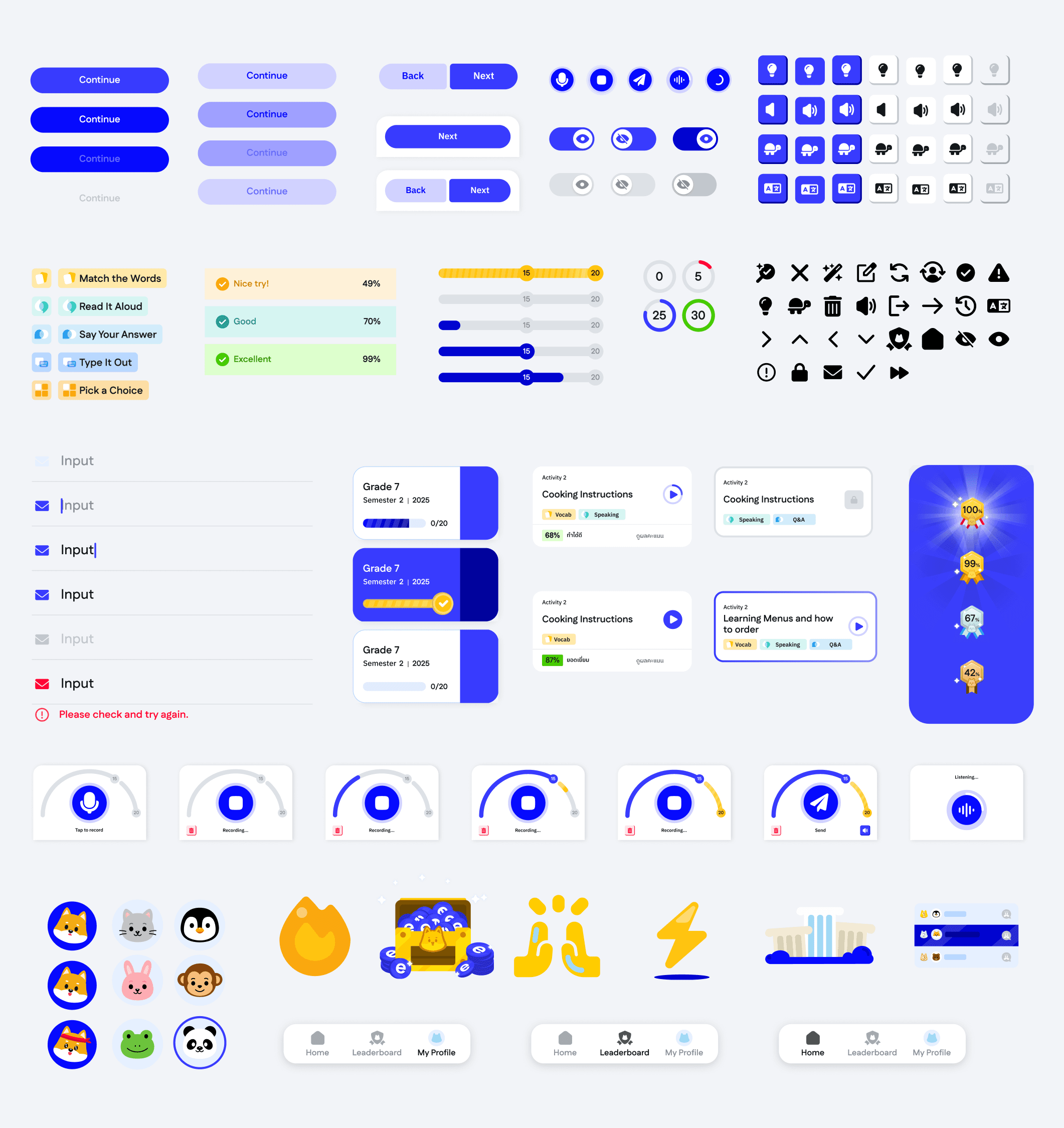
We unified the visual system and softened the tone so the product felt more welcoming, while still focused on reducing hesitation, increasing feedback clarity, and reinforcing progress.
Reflections
EDSY ✺ SHIPPED 2025 ✺ Web App